
What Schools Could Be
Let's imagine what schools could be—no boundaries.

Today, I want to play pretend and reimagine public education in America.
If I were to have a magic wand, if I were to consider how schools could better fit Americans, I do have ideas.
My absence.
But first, an apology.
When I began this Substack, my goal was to publish every Wednesday. Today is the starts of June, and I have not written a new post since April.
The end of the school year, yes, physically exhausted me. I was also busy with celebrations as my son graduated high school:
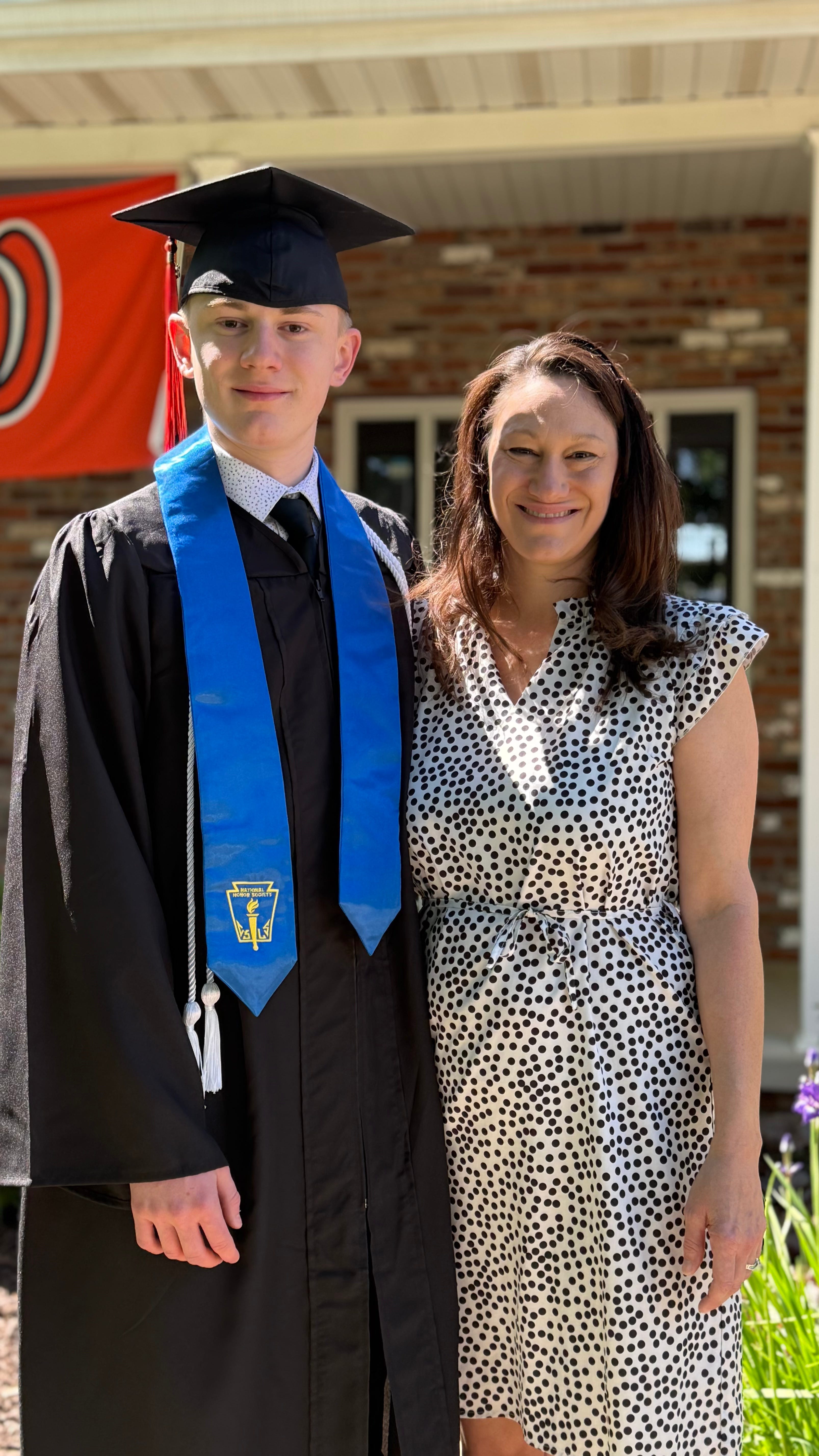
I know you all understand, but still, I needed to put my writing aside so that I could celebrate him, and I am sorry for my lack of publishing.
However, now that I’ve had a child work completely through public schools in Illinois, my experiences as a parent flow into what I see as an educator.
So what could American schools be? From a parent and a teacher perspective, I have a list. (You won’t be surprised that it does not include more “to-do” lists for educators.) For public schools to change, it will take a collective effort of Americans pushing for change and an investment.
I’ve mulled over these ideas, and I’d love feedback. What am I missing? What concept would be reworked in a different way?
Cultural shifts.
Naturally, American schools are part of our culture. Could we culturally change pieces of the school experience for the better? What about:
Remaking the idea of “classes.” From birth, people told my son that he was part of the class of 2025. Is that still appropriate, that kids born in the same timeframe graduate the same year? Could some graduate early, and some later, without any shame attached?
Working through mental health. Teens (and all students of any age) can struggle in many ways, and overall, it is a positive that mental health is openly spoken about. Still, how do students (who might be hospitalized or missing for long periods of time) stay caught up with material? Is a “pause” in a class allowed?
Addressing educators’ health. (I am including administrators, school psychologists, and everyone in this list.) If America had a cultural shift from the martyr teacher to the healthy teacher, what benefit would our students see?
Believing in the system. If everyone in a community rallied behind a school, what would that look like? Perhaps adults would encourage students to read and to explore their passions.
Starting classes at different times. I do not think that educators are babysitters, but I do wonder if attendance would improve and guardians would be more involved with education if school hours were spread throughout the day. Some students might want their days to end at one, while others would not mind coming a little later and staying until five. (This might also help with teacher retention, as teachers could work different hours.)
All of these ideas would take cultural shifts in thinking about what a school is and how it functions, as well as more money. Each potential change would provide access for students and their families who do not fit the current mold of public schools.
Community involvement.
Looking at the entire person who is earning an education makes sense. The training that educators receive reflects this belief: Trauma-informed classrooms, social emotional learning, and culturally responsive teaching are examples.
Communities benefit from educated citizens, so it makes sense for communities to help educational centers.
Some services communities or schools already provide to students:
Laundry servies.
Food, books, hygienic supplies, and school supplies.
A variety of health services.
After hours childcare.
I’m using “communities” loosely here, and that is on purpose: Educators, individuals, businesses, and the government contribute to these programs that might not be “educational” in nature. They contribute because when the entire child is cared for, that child is in a better position to learn.
Goal.
The overall goal for our young people is lofty—to make them lifelong learners. As America changes and as our understanding of how to help people grows, it only makes sense for schools to follow.